
https://www.std-gov.org/blog/list-of-parasites-of-humans/
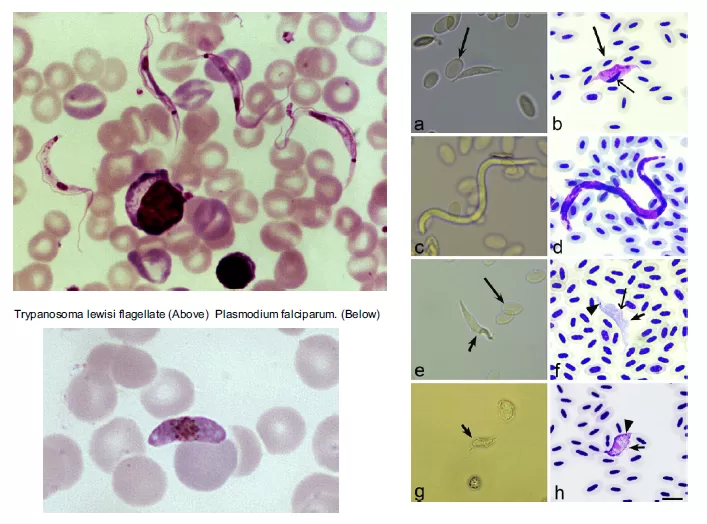
(a, c, e, g) Images of relatively large blood parasites (larger than red blood cells) showing how they look in the buffy coat wet preparations.
(b, d, f, h) Methanol-fixed Giemsa-stained blood films.
(a, b) Leucocytozoon sp. (barbed long arrow, red blood cell; simple long arrow, parasite nucleus).
(c, d) Microfilaria.
(e, f) Trypanosoma sp. (barbed long arrow, red blood cells; short arrow, undulating membrane; arrowhead, kinetoplast; simple long arrow, parasite nucleus).
(g, h) Trypanosoma everetti (short arrow, undulating membrane; arrowhead, kinetoplast).
Scale-bar: 10 μm
In the event parasites are detected, or eosinophils are low or high, suggest to the patient to take the Deep Dive Service.
Symptoms of parasitic infections depend on where in your body you’re infected. Some common symptoms include:
Depending on the location of the infection, there may be:
Sometimes parasitic infections don’t cause any overt symptoms, but may be the cause of chronic ‘ignorable’ symptoms often attributed to aging or of no relevance.
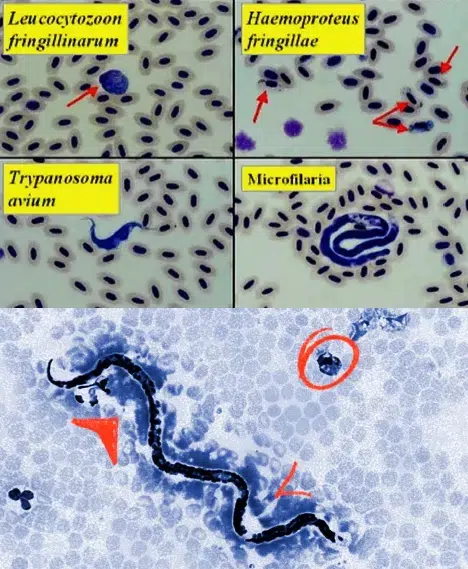
Parasite worm in blood. Notice the blue color. Bacteria is usually green in color. Graphene hydroxide would display un-distorted cells underneath.
It also appears roundish, and tapers at the ends. Where it folds at the bottom of the photo has swollen due to the pressure caused by the fold.
A cotton strand would have lines or fibers running the length of the strand.
Active ameba in un-stained blood. 4 are pictured.
Notice unknown cell near the middle. Is it bacteria / graphene / metals or ?
Also notice the possible Howell-Jolly body at the bottom of the screen.
Ameba in motion, moves very slowly, jellylike. No stain.
You can see how this popup was set up in our step-by-step guide: https://wppopupmaker.com/guides/auto-opening-announcement-popups/